Daily blogs Automation
Why AI Agents Are Replacing the Busywork
Reclaiming 15+ hours a week from CRM hygiene, Slack triage, and report copy-pasting.

In the early stages of building a company, multi-tasking is often treated as a badge of honor. Founders default to wearing every hat, serving as the chief sales executive, default operations manager, customer support lead, and administrative coordinator. While this hands-on approach is necessary at the start, it rapidly transforms into an operational bottleneck.
Startup founders systematically lose between 15 and 20 hours every week — effectively two full working days — to administrative friction. The source of this lost time is rarely high-level strategic decision-making; it is the constant context switching and manual copy-pasting required to keep disparate software tools in sync.
The shift from simple automation scripts to autonomous AI agents is reshaping startup operations. Rather than waiting for a human to push a button or trigger a rule, 24/7 AI agents take end-to-end ownership of repetitive operational loops. By absorbing this low-leverage workload, AI agents give founders back their most vital asset: time to focus on growth and strategy.
Mapping the drain: where 15+ hours a week disappear
Most founders do not realize how much capacity they lose because administrative friction occurs in brief, 5- to 10-minute bursts throughout the day. When mapped across a typical workweek, these micro-tasks accumulate into a massive productivity tax:
- CRM hygiene and pipeline maintenance (5.0 hours/week). After sales calls or prospect demos, founders log meeting notes, update deal stages, set reminders, and enrich lead profiles by hand. Skip it and pipeline visibility dies. Do it and you burn prime selling hours.
- Slack and communication triage (4.5 hours/week). Sorting internal threads, customer inquiries, investor messages, and team mentions. Extracting actionable requests from channel noise creates severe mental overhead and breaks deep focus.
- Multi-tool reporting and cross-posting (3.5 hours/week). Weekly performance updates or board reports mean pulling metrics from billing, product analytics, and CRMs, then reformatting into decks or memos. The founder becomes a human integration layer.
- Scheduling and operational logistics (2.5 hours/week). Calendar conflicts, pre-call briefs, missing attachments, and approval signatures consume the remaining buffer.
The hard limits of traditional automation
When startup leaders attempt to fix these drains using traditional integration tools, they encounter fundamental barriers:
- Rigid rule-based triggers. If-this-then-that logic breaks — or writes corrupt data — the moment a lead formats an email incorrectly or leaves a required field blank.
- No contextual comprehension. Standard workflow tools can copy raw text from one box to another. They cannot read a 30-minute sales transcript, identify key objections, and extract structured next steps for a deal record.
- Heavy maintenance overhead. Dozens of linear automation recipes across a growing stack become their own ongoing job.
- Passive execution. Early-generation chatbots remain completely passive. They need a precise human prompt and handle one step at a time, pushing the execution burden back onto the founder.
Unlike static scripts, an autonomous AI agent operates on an active loop: evaluate context, plan steps, call APIs, execute, verify.
What a 24/7 AI agent actually takes over
By granting an AI agent secure access to your software environment, it acts as a digital teammate capable of managing complete workflows:
- End-to-end CRM orchestration. After a meeting, the agent ingests the recording or transcript, updates CRM deal fields, creates follow-up tasks, and drafts a personalized email for review.
- Intelligent inbox and Slack filtering. It monitors channels, synthesizes long threads into executive summaries, answers routine support questions from internal docs, and flags issues that need a founder.
- Automated data aggregation and reporting. On a schedule, it queries product databases, billing gateways, and marketing tools, writes a progress update, and posts it to the team.
- Context-aware lead research. When a prospect books a meeting, the agent researches company size, funding, and stack, then drops a brief in Slack before the call.
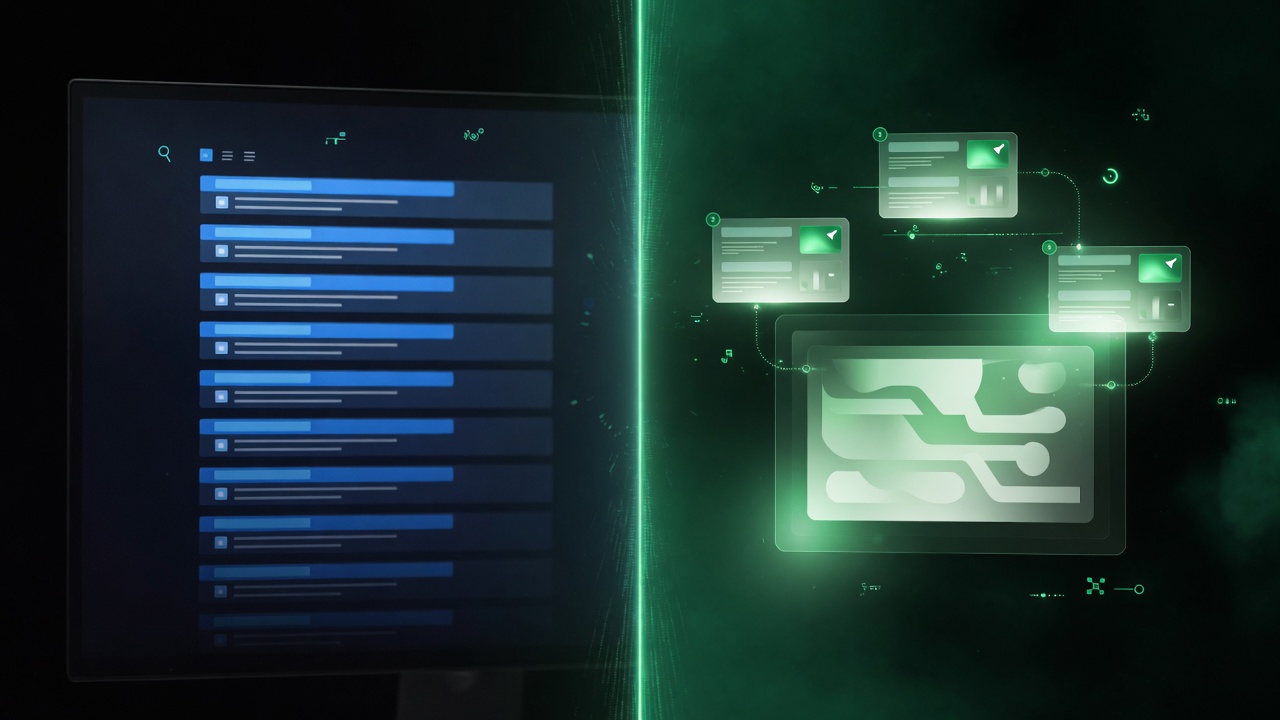
The operational contrast: manual vs. agent-driven
Manual
Twenty minutes typing notes after every sales call. Reading every inbound support request. Exporting CSVs for the weekly update. Hunting LinkedIn before a prospect meeting.
Agent-driven
Deal records update themselves. Common questions resolve with context attached. Metrics compile into a draft memo. Account briefs land where the team already collaborates.
A practical three-step implementation framework
Adopting an agent-driven workflow does not require replacing your stack or a massive upfront investment:
- Audit high-frequency friction. Track operational activity for 48 hours. Pinpoint every task that involves moving information between apps or copying data from transcripts into software fields.
- Deploy a single closed-loop workflow. Start with one repetitive, high-volume process — automated lead enrichment or post-meeting CRM updates — and prove reliability.
- Keep human-in-the-loop safeguards. Let the agent prepare drafts, update internal systems, and assemble reports. Retain review checkpoints for external communications until you have earned operational confidence.
Strategic focus over administrative maintenance
Every hour a founder spends on repetitive administrative chores is time stolen from long-term strategy, product refinement, customer relationships, and team building.
By offloading context switching and manual copy-pasting to 24/7 AI agents, founders eliminate the noise that bogs down daily execution. The future of scaling a startup is not about working longer hours; it is about delegating busywork to software designed to run continuously in the background.